How to Pick a Gunna Type Beat in 2026 and Turn a Free Download Into a Release-Ready Track
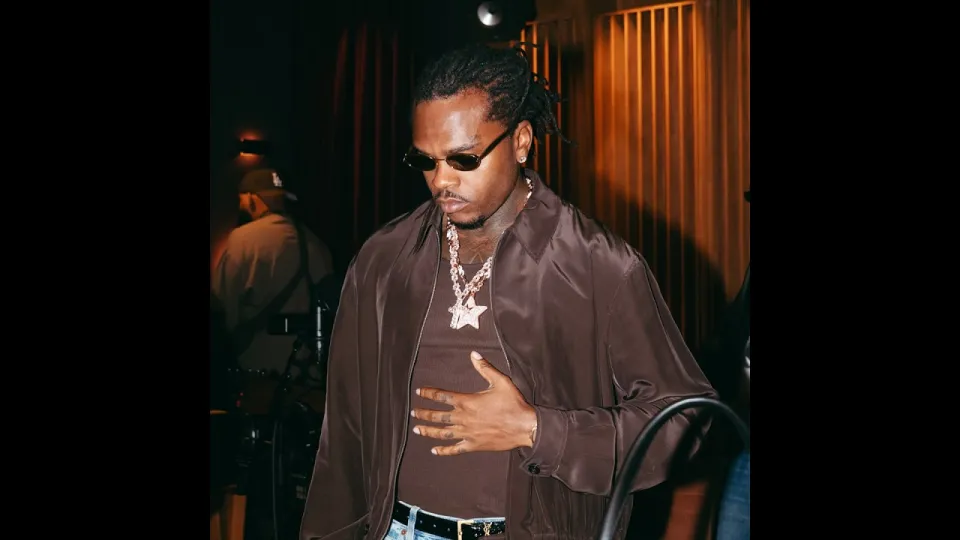
Video: [FREE] Gunna Type Beat - "Professional"
You can order the same kind of articles for your own video to boost it on YouTube and Google. Just message the Telegram bot @sat_sit_bot. It writes articles around your video, embeds the video and publishes them on popular niche websites (no ads). Free trial — 50 articles.
· based on the channel MIG
A Gunna type beat is an original instrumental built to match the sound Gunna raps over — melodic, minor-key trap with guitar or orchestral loops, rolling hi-hats and wide open space for a laid-back, slurred flow. MIG's "Professional" is a current example: 122 BPM in F# minor, free to download for non-profit use, with the untagged file available through the BeatStars purchase page. This guide explains what you can legally do with it, how to write over it, and what separates a usable type beat from a throwaway loop.
What the "Professional" Gunna type beat actually contains
"Professional" is a guitar-driven trap instrumental in F# minor at 122 BPM, a tempo that sits in the pocket where Gunna's mid-tempo records live. The arrangement leans on a dark melodic loop, crisp programmed drums and heavy hi-hat subdivision — the elements listeners immediately flagged as the strongest part of the upload. The minor key gives the melody a somber, almost cinematic quality, which is why several listeners described it as orchestral trap rather than a plain guitar loop.
Structurally, the beat follows the standard type-beat format: an intro, a looped verse section, a drop where the drums enter fully, and a switch-up or breakdown before the hook returns. That format matters because it lets a rapper map a full song — two verses and a chorus — without guessing where sections begin. The 122 BPM tempo also means a 16-bar verse lands comfortably without pushing the delivery into double-time territory.
Free download versus lease: what the license allows
The free version of "Professional" is licensed for non-profit purposes only, and the producer explicitly states that it cannot be distributed through streaming services such as Spotify or Apple Music. In practice that means you can write to it, record a demo, post a snippet on social media, or perform it at a show with no revenue attached — but you cannot monetize a release built on the free file.
For anything commercial, the path is the untagged purchase through https://bsta.rs/lKzH8q. The listing notes that adding three beats to the cart activates a discount, which is worth planning for if you intend to record an EP rather than a single. A standard lease on a type beat generally grants distribution rights up to a set stream or sales cap, requires credit to the producer, and keeps the underlying instrumental owned by the producer; exclusive rights, when available, transfer more control at a higher price. Always read the specific contract on the BeatStars page rather than assuming terms from another beat.
How to write and record over a 122 BPM F# minor beat
- Set your DAW session to 122 BPM and import the file so the grid aligns with the hi-hat rolls; a two-bar or four-bar loop is enough to start.
- Find the root note — F# — and hum melodies around it before writing bars; the minor tonality rewards simple, repeated phrases over complex ones.
- Draft a 16-bar verse with a clear pocket: Gunna's style favors relaxed, melodic delivery with ad-libs filling the gaps rather than dense, rapid-fire rhyming.
- Use the drop and breakdown as structural markers — leave space in the first four bars of a verse and let the drums carry the energy into the hook.
- Record a rough vocal, then re-record with the beat at a lower volume in your headphones so pitch and timing stay accurate.
Because the tempo is moderate, a triplet flow will feel fast against the grid, while a straight eighth-note flow will feel spacious. Most records in this lane alternate between the two across a verse.
Typical questions producers and artists ask about type beats
A recurring concern is whether a free type beat can be used for a mixtape that later goes to streaming — it cannot, unless a lease is purchased, because the free license is non-profit only. Another common question is whether the tagged version is usable at all: tags sit over the instrumental and will bleed into your vocal take, so the untagged file is the practical choice for any serious recording.
Artists also ask how to avoid sounding like a copy. The answer is usually in the vocal, not the beat: the instrumental supplies a mood and a tempo, while the melody, ad-lib vocabulary and phrasing are where a record becomes original. Finally, producers want to know how to make their own version of this sound — start with a minor-key guitar or string loop, layer a sub-heavy 808 pattern, and keep the hi-hat rolls varied rather than constant, since the movement in the hats is what listeners notice first.
Where this beat fits in the Gunna and Young Thug lineage
Gunna's catalog, particularly the "One of Wun" era, established a template of melodic, guitar-adjacent trap that producers now treat as a genre of its own. The Young Thug collaborations pushed that template toward stranger, more atmospheric arrangements, and type beats in this lane often borrow both: the smooth vocal pocket of a Gunna record and the off-kilter melodic choices of a Thug record. "Professional" sits closer to the Gunna side, with a dark melody that could carry either a street-oriented verse or a more introspective one.
That versatility is the practical value of a well-made type beat. A single instrumental at 122 BPM in F# minor can support a hook-driven single, a moody album cut, or a freestyle, which is why producers keep returning to the format.
All links from the video
- Untagged beat purchase and license terms: https://bsta.rs/lKzH8q
- Producer contact and socials: @prod_mig on social platforms, migbeats.prod@gmail.com
Final thoughts
"Professional" is a clean illustration of the Gunna type beat formula: 122 BPM, F# minor, a dark melodic loop and drums that leave room for a melodic rapper. The free file is a legitimate way to demo ideas, but any release on streaming platforms requires the untagged lease, which you can secure at https://bsta.rs/lKzH8q, where adding three beats to the cart unlocks a discount. The video breakdown and the instrumental itself come from the channel MIG, whose catalog is worth following if this sound fits your writing. Treat the free download as a writing tool and the lease as the step that turns a demo into a distributable record.
Key takeaways
- "Professional" by MIG runs at 122 BPM in F# minor and is tagged as a Gunna type beat with a guitar-led, orchestral-trap flavor.
- The free download is licensed for non-profit use only and cannot be uploaded to Spotify or Apple Music.
- The untagged version is sold through the BeatStars link https://bsta.rs/lKzH8q, with a discount when three beats are added to the cart.
- Gunna's "One of Wun" era and the Young Thug collaborations are the reference points producers and listeners use for this style.
- Typical Gunna-style beats sit between roughly 120 and 140 BPM, with triplet hi-hat rolls and spacious, melodic loops.
Questions & answers
Can I put a song recorded over this free Gunna type beat on Spotify?
No. The free version of "Professional" is licensed for non-profit purposes only, and the producer states it is not available for streaming services such as Spotify or Apple Music. To distribute a release, you need the untagged beat and a lease purchased through the BeatStars link.
What tempo and key is the "Professional" beat in?
The instrumental is 122 BPM in F# minor. That tempo sits in the mid-tempo range typical of Gunna's melodic records, and the minor key gives the guitar-led loop its dark character.
Is the free download tagged, and does it matter for recording?
Free downloads of type beats are usually the tagged version, with the producer's tag placed over the instrumental. Tags will bleed into your vocal take and cannot be removed cleanly, so use the untagged file for any recording you intend to keep.
How do I make my own beat in this style?
Start with a minor-key guitar or string loop, build a sub-heavy 808 pattern around the root note, and program hi-hat rolls with variation rather than a constant pattern. Keep the arrangement sectioned into intro, verse, drop and breakdown so a rapper can map a full song.
Source: [FREE] Gunna Type Beat - "Professional" · Markdown version